


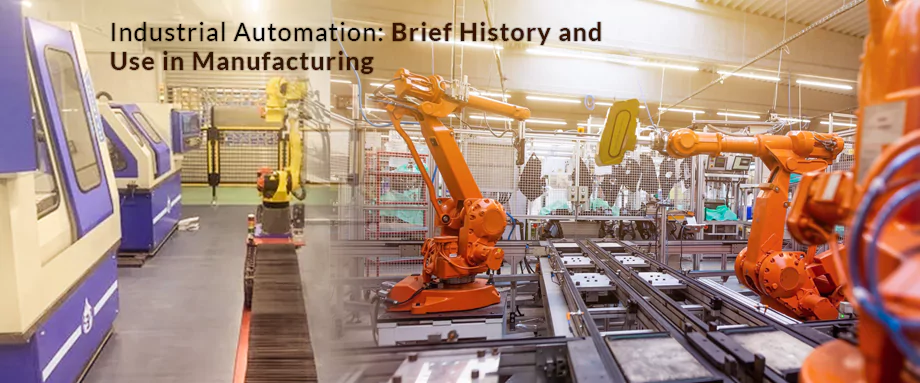
In the modern era, the manufacturing industry has witnessed significant transformations due to the advent of industrial automation. From assembly lines to robotic systems, automation has revolutionized how goods are produced, increasing efficiency, accuracy, and productivity. In this blog, we will delve into the history of industrial automation, explore its use in manufacturing, and discuss the importance of industrial control care in ensuring smooth operations.
What Is Industrial Automation?
Industrial automation refers to using technology and control systems to automate industrial processes and tasks previously performed manually. It involves the application of various technologies, such as robotics, computer systems, sensors, and actuators, to streamline and optimize manufacturing and production processes.
Industrial automation aims to increase efficiency, productivity, and accuracy while reducing costs, human error, and the need for manual intervention. It integrates hardware and software components to monitor, control, and manage industrial operations.
Key components of industrial automation include:
Control Systems: These systems, such as programmable logic controllers (PLCs) and distributed control systems (DCS), monitor and control machinery and processes. They receive input from sensors and provide output to actuators to regulate variables like temperature, pressure, speed, and flow.
Robotics: Robots are utilized to automate repetitive, dangerous tasks or require high precision. Industrial robots can perform tasks like assembly, welding, material handling, and painting quickly and accurately. They can work alongside humans or operate independently in dedicated work cells.
Sensors and Actuators: Sensors collect data about physical variables such as temperature, pressure, position, and humidity. Conversely, actuators are responsible for initiating physical actions based on the control system's instructions. They can control movements, open or close valves, and manipulate objects.
Human-Machine Interface (HMI): HMI is vital in facilitating user interaction and system monitoring in automated processes. In the event of an HMI malfunction, technicians employ a systematic approach to diagnose and address the problem, ensuring the continued functionality and user-friendliness of the interface. HMI repair services are essential for maintaining optimal performance and usability, enabling efficient control and informed decision-making through real-time visualization of processes, alarms, and diagnostics.
Communication Networks: Industrial automation systems often rely on communication networks to connect devices, share data, and enable centralized control. These networks can be wired (e.g., Ethernet) or wireless (e.g., Wi-Fi, Bluetooth), facilitating seamless integration and coordination of various components.
Industrial automation applications can be found across multiple industries, including manufacturing, automotive, aerospace, pharmaceuticals, food processing, logistics, and more. It encompasses various processes such as assembly, packaging, quality control, material handling, inventory management, and machine maintenance.
Overall, industrial automation empowers industries to achieve higher productivity, enhanced product quality, improved safety, reduced downtime, and increased competitiveness in the global market. It continues to evolve with technological advancements, paving the way for smart factories and the Industrial Internet of Things (IIoT), where interconnected devices and data-driven insights drive intelligent decision-making and optimization.
The Evolution of Industrial Automation:
Automation in manufacturing can be traced back to the early 20th century when Henry Ford introduced the assembly line for the mass production of automobiles. This breakthrough reduced the time required to build a car from days to hours, setting the stage for industrial automation.
Over the decades, technological advancements have fueled the evolution of automation. In the 1950s, the introduction of numerical control (NC) machines allowed manufacturers to automate tasks previously performed manually. NC machines utilized punched cards or tapes to control the movements of machine tools, enabling precise and repeatable operations.
The 1970s witnessed the emergence of programmable logic controllers (PLCs), which revolutionized industrial control systems. PLCs, with their ability to monitor and control various manufacturing processes, quickly became the backbone of factory automation. Regarding PLC repair, ICC follows a systematic approach to ensure efficient and reliable resolution of problems. From initial assessment and troubleshooting to component replacement or repair, ICC technicians have the expertise to restore the functionality of PLC systems. They provided a flexible and reliable way to automate processes and respond to changing production demands.
The Use of Industrial Automation in Manufacturing:
Industrial automation is employed across various manufacturing sectors, including automotive, electronics, pharmaceuticals, food processing, and more. Its applications are diverse and far-reaching:
Robotic Automation: Robots have become a common sight on factory floors. They excel at repetitive and precise tasks, such as assembly, welding, and material handling. Robotic automation enhances productivity and ensures worker safety by taking over hazardous or physically demanding operations.
Computer-Integrated Manufacturing (CIM): CIM integrated computer systems with manufacturing processes to streamline operations. It facilitates real-time monitoring, quality control, inventory management, and efficient resource allocation, resulting in improved production efficiency and reduced costs.
Process Automation: Industrial automation extends beyond mechanical tasks to encompass complex processes. Process automation involves using advanced control systems, such as distributed control systems (DCS) and supervisory control and data acquisition (SCADA), to monitor and optimize processes like chemical manufacturing, power generation, and wastewater treatment.
Industrial Control Care: Ensuring Smooth Operations:
Industrial control care plays a vital role in maintaining the reliability and efficiency of automated manufacturing systems. Here are some key aspects to consider:
Maintenance: Regular maintenance and inspections of automation equipment are crucial to identify and resolve issues before they escalate. This includes checking sensors, actuators, controllers, and other components to ensure they function optimally.
Upgrades and Modernization: As technology advances, upgrading automation systems becomes necessary to keep up with evolving industry standards and demands. Upgrades may involve replacing outdated hardware, updating software, or integrating new functionalities to enhance productivity.
Cybersecurity: With the increased connectivity of industrial control systems, cybersecurity has become a paramount concern. Implementing robust security measures, such as firewalls, encryption, and network segmentation, is essential to protect against cyber threats and safeguard sensitive data.
Training and Skill Development: Properly trained personnel are vital for maintaining and operating automated manufacturing systems effectively. Regular training sessions and skill development programs ensure that operators and maintenance staff are up-to-date with the latest technologies and best practices.
Wrapping Up:
Industrial automation has transformed the manufacturing industry, revolutionizing production processes and driving significant improvements in efficiency and productivity. From the early days of assembly lines to the advanced robotic systems of today, automation continues to evolve and shape the future of manufacturing. By embracing industrial control care, businesses can ensure smooth operations and maximize the benefits derived from automated systems. As technology progresses, the potential for further advancements in industrial automation is immense, promising exciting possibilities for the future of manufacturing.